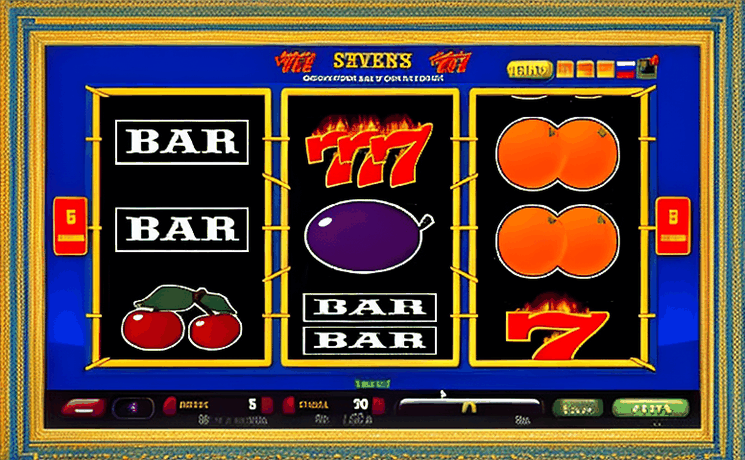
Have you ever stood at Crown Perth watching the reels spin, wondering why your twenty-dollar session evaporates faster than a shandy on a Fremantle summer afternoon? The maths behind that feeling is not some mystical casino spell. It is a number that tells you how far results are likely to stray from the average over time. If you have been searching the phrase standard deviation pokies online AUD, you have already stumbled onto the right question, even if the answer sounds less glamorous than the neon promises on the floor.
Most regulars treat volatility like a weather forecast they can argue with. They call it tight, they call it loose, they call it rigged. None of those labels survive contact with the actual distribution of outcomes. A machine can pay out its advertised return to player percentage and still hand you a string of dry spins that feels personal. The spread around the mean is what decides whether your bankroll breathes or suffocates during a single sitting. plinko online
You do not need a degree in statistics to read the signs, but you do need to stop confusing luck with structure. The same logic applies whether you are pulling a lever in a Northbridge pub or clicking through a browser on your phone. Risk is not a mood. It is a measurable property of the game you chose, and it behaves the way it behaves regardless of what you mutter at the screen.
Volatility and the spread of results
Variance describes how widely individual sessions scatter around the expected return. A low-variance pokie pays small wins frequently, which keeps the balance ticking upward in tiny increments before the house edge quietly does its work. A high-variance poki holds back its payouts and then delivers them in clusters that can look like a winning streak even when the long-run average has not shifted. You can think of it like a bond portfolio where the yield is fixed but the mark-to-market swings are not, only here the swings arrive on a timeline measured in seconds rather than quarters.
Pick any machine with a published return figure and you still cannot predict the next spin. The distribution only tells you what happens across thousands of plays, not across your Thursday night. A practical way to judge a title is to read the paytable and count how many symbols sit on each reel, then ask whether the top award requires a specific combination that rarely lines up. That exercise takes about five minutes and removes the guesswork from choosing a game that suits your tolerance for swings.
Some advice you will hear in the pubs insists that lower volatility always means safer play. That claim ignores the trade-off. Lower variance slows the rate at which your bankroll erodes, but it also caps the size of the upside you can catch in a single run. If your goal is simply to stretch a session, the slower bleed makes sense. If your goal is to give a modest stake a chance to multiply, the safer option is usually the wrong tool for the job.
Reading the return figure honestly
The advertised return to player percentage is a long-run average, not a promise attached to your session. A title listed at ninety-six percent can still leave you down after two hours because the average only settles over a sample size that no single player ever reaches. Treat the number as a label on the box, not a guarantee written into your ticket. You can find the same kind of confusion on mainstream sports pages, where a headline about odds gets rewritten by the time the final whistle blows, and the same discipline applies here: read the number, then read what it actually means.
A sensible check takes about ten minutes and saves you from buying into a title that does not match your expectations. Open the game information screen, locate the theoretical return figure, and note whether the operator displays it prominently or hides it behind a menu. If the number is missing or buried, walk away. If it sits around ninety-four to ninety-six percent on a standard title, you are looking at a normal spread. If it climbs much higher on a branded novelty, check whether the game uses a fixed bet structure that changes the maths.
You can test the claim yourself with a hypothetical example. Say you deposit fifty dollars and play a ninety-six percent return title for a hundred spins at one dollar each. The expected loss on that wager is twenty dollars over the long run, but your actual result after a hundred spins could land anywhere from a small profit to a much larger hole, depending on the variance built into the paytable. The expected figure tells you the direction of the tilt. It does not tell you where your balance lands tonight.
How the law shapes what you can play
Australian players operate under a framework that restricts how offshore operators can offer real-money casino games to people inside the country. The Interactive Gambling Act 2001 makes it an offence for an operator to provide certain real-money online casino services to an Australian consumer, which is why many offshore sites still accept Australian players while structuring their offer around the legal grey zone rather than a clean domestic licence. That distinction matters because it changes what recourse you have if a withdrawal stalls or a bonus term is applied in a way you did not expect.
The practical effect for a player is not abstract. You are choosing which operator to trust without the same regulatory backstop you would expect from a locally licensed venue. Read the terms on withdrawals, note the timeframe for processing, and check whether the site publishes a clear complaints path before you put money in. A site that hides those details behind a support chat is telling you something about how it handles friction when things go wrong.
If you want to compare how different markets talk about the same issue, you can read a local paper’s coverage of gambling policy at https://dailytelegraph.com.au/ or scan a community thread like the one at https://reddit.com/r/brisbane, but neither of those sources turns the legal situation into a shortcut for picking a safe site. The law sets the boundary. Your own checking routine decides whether you step inside it carefully or walk into it blind.
Picking a session that fits your bankroll
A session plan is just a set of limits written down before the first spin, and it works only if you actually keep it. Decide the amount you are willing to risk, set a time limit, and define the point at which you stop whether you are ahead or behind. The discipline is boring, which is exactly why it works. A plan that depends on your mood in the middle of a run will fail the moment the machine decides to test your patience.
A concrete way to size a session is to divide your risk amount by the number of spins you expect to play and then check whether the resulting per-spin stake keeps the swings within a range you can stomach. If you want to play three hundred spins and you are comfortable losing the whole stake, a one-dollar bet keeps the exposure predictable. If you push the per-spin amount higher to chase a bigger hit, you are no longer managing variance; you are gambling on timing.
You can also compare different titles by watching how quickly the balance moves during a short trial. Play fifty free or low-stakes spins, note the largest drawdown from the starting balance, and decide whether that swing feels tolerable before you commit real money. The exercise takes about ten minutes and gives you a practical read on the spread that no marketing blurb will give you.
The short verdict
Standard deviation is not a secret weapon, and it is not a curse either. It is the shape of the risk you signed up for when you picked the game. Choose the spread that matches your tolerance, check the return figure, and keep your session limits in writing. Anything else is just noise dressed up as insight.
Medical Disclaimer:
The information provided in these blog posts is intended for general informational and educational purposes only. It is not a substitute for professional medical advice, diagnosis, or treatment. Always seek the advice of your physician or other qualified healthcare provider with any questions you may have regarding a medical condition. The use of any information provided in these blog posts is solely at your own risk. The authors and the website do not recommend or endorse any specific products, treatments, or procedures mentioned. Reliance on any information in these blog posts is solely at your own discretion.